


Product Description
Human Sertoli Cells (HSerC) are essential for testicular development, spermatogenesis, and formation of the blood-testis barrier [1, 2]. HSerC limit the passage of substances such as hormones and nutrients to the adluminal compartment of the seminiferous tubules [1]. In addition to forming the blood-testis barrier, HSerC also provide the main structural support for the seminiferous tubules and protect the germ cells from the immune system [1]. Aberrant HSerC proliferation can contribute to the development of male reproductive disorders such as testicular germ-cell cancer, cryptorchidism, hypospadias, and low sperm count [2]. HSerC proliferation is in part controlled by follicle-stimulating hormone (FSH) and thyroid hormone (TH), where FSH drives proliferation and TH promotes a more quiescent state [3]. Cultured HSerC are a useful in vitro model to better understand testicular dysgenesis syndrome and to develop treatments for male reproductive disorders.
iXCells Biotechnologies provides high quality HSerC, which are isolated from human testis and cryopreserved at P1, with ≥ 1.5 million cells in each vial. HSerC express GATA-4 and Sox-9 and are negative for HIV-1, HBV, HCV, mycoplasma, bacteria, yeast, and fungi. They can further expand for no more than 3 passages in Sertoli Cell Growth Medium (Cat# MD-0091) under the condition suggested by iXCells Biotechnologies. Further expansion may decrease the purity.

Figure 1. Human Sertoli Cells (HSerC). The cells were recovered, and seeded at 10,000 cells/cm2 following iXCells’protocol. Phase contrast images were taken at the indicated time post recovery.
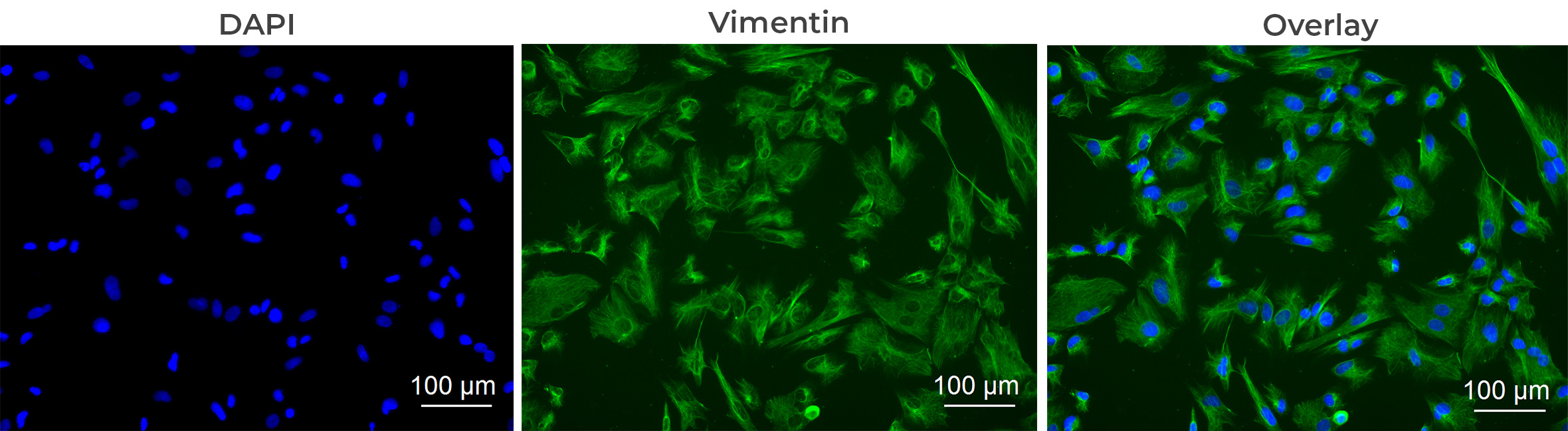
Figure 2. Immunofluorescence staining of HSerC with antibody against Vimentin (Green). Nuclei were counterstained
by DAPI (Blue).
Product Details
| Organism | Homo Sapiens, Human |
| Cell Type | Epithelial Supporting Cells |
| Tissue | Human Testis |
| Disease | Normal |
| Package Size | 1.5 x 10⁶ cells/vial |
| Passage Number | P1 |
| Growth Properties | Adherent |
| Product Format/Shipped | Cryopreserved |
| Storage | Liquid Nitrogen |
| Associated Media | Sertoli Cell Growth Medium(Cat# MD-0091) |
References
[1] Chui K, Trivedi A, Cheng C, Cherbavaz, Dazin P, Huynh A, Mitchell J, Rabinovich G, Noble-Haeusslein L, John C. (2011) “Characterization and functionality of proliferative human Sertoli cells.” Cell Transplant. 20(5): 619-635.
[2] Sharpe R, McKinnell C, Kivlin C, Fisher J. (2003) “Proliferation and functional maturation of Sertoli cells, and their relevance to disorders of testis function in adulthood.” Reproduction. 125: 769-784.
[3] Tarulli G, Stanton P, Meachem S. (2012) “Is the adult Sertoli cell terminally differentiated” Biol Reprod. 87(1): 1-11.
Lee, S., Park, J., Lee, D., Otsu, K., Kim, P., Mizuno, S., . . . Jung, H. (2020). Mast4 knockout shows the regulation of spermatogonial stem cell self-renewal via the fgf2/erm pathway. Cell Death & Differentiation. doi:10.1038/s41418-020-00670-2 - Learn More
Strange, D. P., Jiyarom, B., Pourhabibi Zarandi, N., Xie, X., Baker, C., Sadri-Ardekani, H., . . . Verma, S. (2019). Axl promotes zika virus entry and modulates the antiviral state of human sertoli cells. MBio, 10(4). doi:10.1128/mbio.01372-19 -- Learn More