




Product Description
Human chondrocytes are a specialized cell type with a highly developed cytoskeleton in human articular cartilage. Chondrocytes have a round or oval shape and occupy only 5–10% of the total cartilage volume [1]. These cells are primarily responsible for maintaining the biomechanical properties of cartilage and the extracellular matrix [2]. Mature chondrocytes produce essential structural proteins, including collagen types II, IX, and XI, as well as aggrecan. Articular chondrocytes also synthesize lubricin, which plays a crucial role in reducing friction between articulating cartilage surfaces. Since articular cartilage has a limited capacity for self-repair, chondrocytes are a focus of research on cartilage degeneration and regeneration in conditions such as osteoarthritis and rheumatoid arthritis.
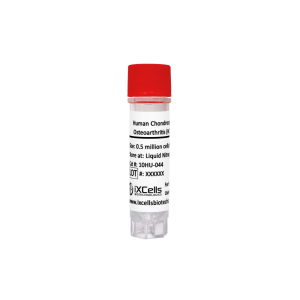
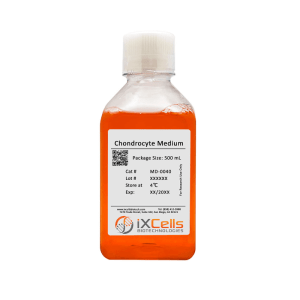
iXCells Biotechnologies offers HC-a from human articular cartilage (Figure 1). These HC-a are Collagen II positive and Aggrecan positive (Figure 2). HC-a are negative for HIV-1, HBV, HCV, mycoplasma, bacteria, yeast, and fungi. These cells can be maintained in Chondrocyte Medium (SKU: MD-0040) for at least 3 passages.

Figure 1. Human Chondrocytes-articular (HC-a) (phase contrast).

Figure 2. HC-a provided by iXCells are positive for Collagen II and Aggrecan, as shown by immunostaining.
Product Details
| Organism | Homo Sapiens, Human |
| Cell Type | Chondrocytes |
| Tissue | Human articular cartilage |
| Disease | Normal |
| Package Size | 0.5 x 10⁶ cells/vial |
| Passage Number | P2 |
| Growth Properties | Adherent |
| Product Format/Shipped | Cryopreserved |
| Storage | Liquid Nitrogen |
| Associated Media | Chondrocyte Medium (Cat# MD-0040) |
References
[1] Bačenková D, Trebuňová M, Demeterová J, Živčák J. Human Chondrocytes, Metabolism of Articular Cartilage, and Strategies for Application to Tissue Engineering. Int J Mol Sci. 2023 Dec 4;24(23):17096. doi: 10.3390/ijms242317096. PMID: 38069417; PMCID: PMC10707713.
[2] Tallheden T, Brittberg M, Peterson L, Lindahl A. Human articular chondrocytes–plasticity and differentiation potential. Cells Tissues Organs. 2006;184(2):55-67. doi: 10.1159/000098947. PMID: 17361078.